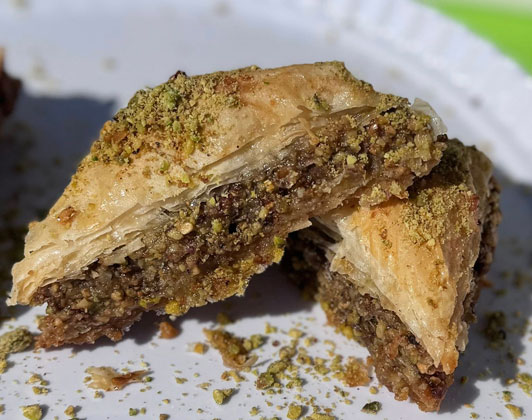
When I stand in my kitchen at A Lil’ Baklava, carefully layering sheets of phyllo, I sometimes catch myself smiling at the history in my hands.
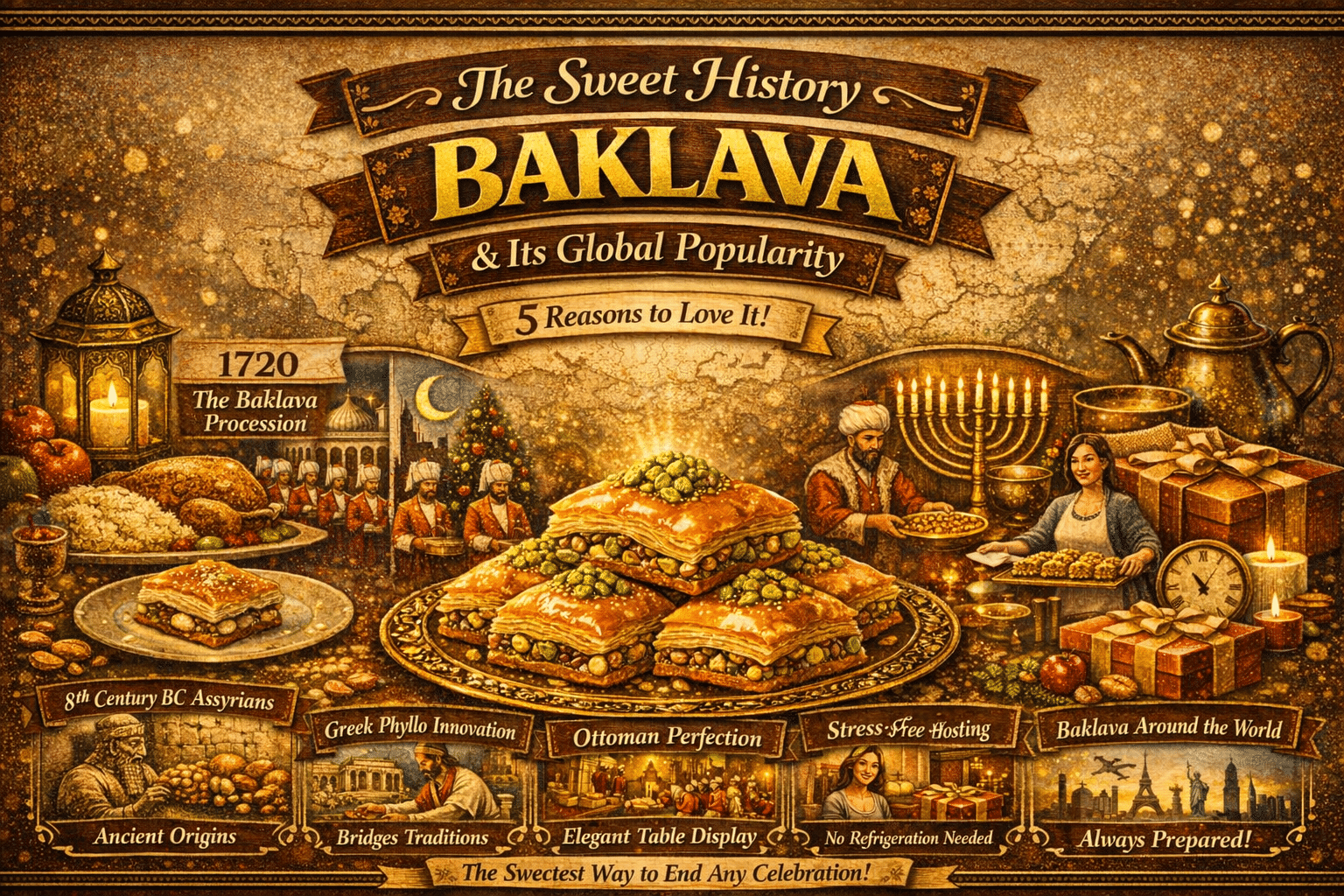
I imagine Istanbul in the year 1720. It is the 15th of Ramadan. The massive gates of the Topkapi Palace swing open. Hundreds of elite soldiers line up, but they are not marching for war. They are marching for dessert.
This famous event was known as the “Baklava Procession.” It was a moment where the Sultan proved his wealth and power, not with swords, but with huge trays of golden, crispy baklava. For centuries, this dessert was a symbol of ultimate generosity, reserved only for the very rich.
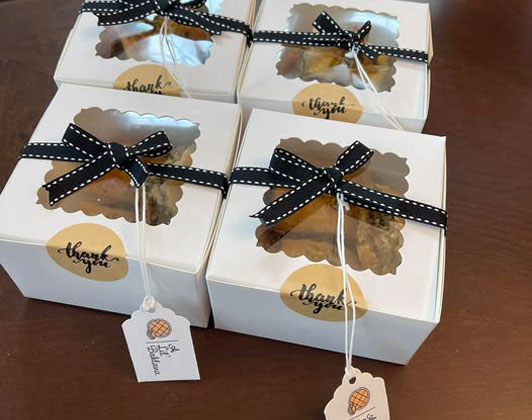
I am not a Sultan. And I do not live in a palace. But every time I pack a box of A Lil’ Baklava for a customer, I feel that same spirit of generosity. I feel proud that I can share a luxury that was once forbidden to the common people.
So, how did this “royal” pastry travel from the Sultan’s guarded table to becoming a beloved treat in homes across America? Here is the fascinating story behind the layers.
The Great Debate: Is Baklava Greek or Turkish?
Wars have been fought over land. But few battles are as passionate (and sweet) as the battle over The Fascinating Origins of Baklava.
If you ask a Greek, they will tell you it is theirs.
If you ask a Turk, they will say they perfected it.
If you ask me, Aysha, a nurse turned baker, I will tell you something simpler.
It does not matter who invented it.
It only matters who you share it with.
The truth is, both cultures played a massive role. History is rarely about one single inventor. It is about evolution.
- The Greek Contribution:
- Historians believe that Ancient Greek merchants discovered thin dough techniques from the East. They brought a major innovation to the table.
- They created the “Phyllo.” In Greek, the word “Phyllo” literally means “Leaf.”
- They focused on making the dough as thin as a leaf, giving us the delicate texture we love today.
- The Turkish Contribution:
- While the Greeks named the dough, the Ottoman Empire (modern-day Turkey) perfected the architecture.
- In the royal Topkapi Palace kitchens, baking was a serious profession.
- The chefs there focused on precision.
- They stacked layers upon layers to create a dessert fit for Sultans.
- This is where the modern form of Baklava truly was born.
The Ancient Roots (It Goes Back Further!)
Before the Greeks and the Turks, there were the Assyrians. Around the 8th century B.C., Assyrians were already baking primitive versions of this treat. Their Recipe Was Simple:
- Layers of unleavened bread.
- Chopped nuts in between.
- Soaked in honey. It was rough and rustic. It was a far cry from the refined, paper-thin pastry we bake today, but the soul of the dessert was there.
This is just the beginning of the story. The journey from simple grains to the luxurious pastries we know today took thousands of years, from ancient sustenance to the palaces of Marie Antoinette, and A brief history of the world’s most beloved pastry that tells how they began and then reached the form we see now.
Is Baklava Jewish? The Sephardic Connection
Many people are surprised when they search “Is baklava Jewish?” The answer is yes. It is a beloved part of Sephardic Jewish tradition. When bakers moved across borders, they took their recipes with them, making Baklava a staple for specific holidays:
- Rosh Hashanah (New Year): The many layers represent the hope for a year filled with “abundant sweetness.”
- Shavuot: It is served because the ingredients (nuts and honey) are considered kosher and pure.
- Purim: Often enjoyed as a treat to celebrate victory and survival.
At A Lil’ Baklava, we honor this universal tradition of celebration. Whether it is for a holiday, a wedding, or a new beginning, the sentiment remains the same. We are wishing you a sweet life.
The Nurse’s Take: Why Precision Matters in History
You might wonder how a nurse ended up obsessed with history. The answer is simple: Precision. In nursing, a millimeter of difference matters. Surprisingly, the same applies to the history of Baklava.
The Ottoman chefs didn’t just “throw ingredients together.” They treated baking as a science, mastering three critical elements:
- Temperature: Knowing exactly when the oven heat turns the dough golden without burning it.
- Thickness: Ensuring the syrup is viscous enough to soak in, but light enough to keep the crunch.
- Ratio: Balancing the nuts and dough so one never overpowers the other.
This is my philosophy at A Lil’ Baklava. I respect the history by respecting the process. When I layer the phyllo, I am not just making a dessert. I am repeating a motion that masters have done for centuries, but adding my own modern touch of care.
How Baklava Conquered the World
Today, you can type “Baklava near me” and find it in New York, London, or Dubai. But why did it become so popular globally?
1. It Travels Well Unlike cream cakes that spoil in hours, Baklava was the original “traveling dessert.” Merchants and immigrants could carry it for days without it spoiling.
2. It is Versatile Every culture adds its own twist.
- The Middle East:
- Uses rose water and pistachios (This is our style!).
- The Balkans:
- Often use walnuts and baking creates a denser texture.
- The US:
- We love innovation.
- That is why I created the Baklava Cheesecake, blending the old world with the new.
What Makes Our Recipe Special?
We respect the ancient roots, but we bake for the modern palate. Historical recipes often used very heavy honey that masked the flavor of the nuts. We do it differently.
The A Lil’ Baklava Difference:
- The Syrup: We use a light sugar syrup infused with rose water. It enhances the nut flavor instead of overpowering it.
- The Nuts: We use premium pistachios and walnuts, generous amounts of them.
- The Balance: It is sweet, but not “tooth-aching” sweet.
Final Thoughts: A Taste of History
When you bite into a piece of Baklava, you are not just eating sugar and flour. You are tasting the trade routes of the Assyrians. You are tasting the innovation of the Greeks. You are tasting the luxury of the Ottoman palaces. And at our shop, you are tasting the care of a nurse who wants to bring people together.
You don’t need a history book to understand the past. You just need a fork.Ready to taste a piece of history? Shop Our Collection Now