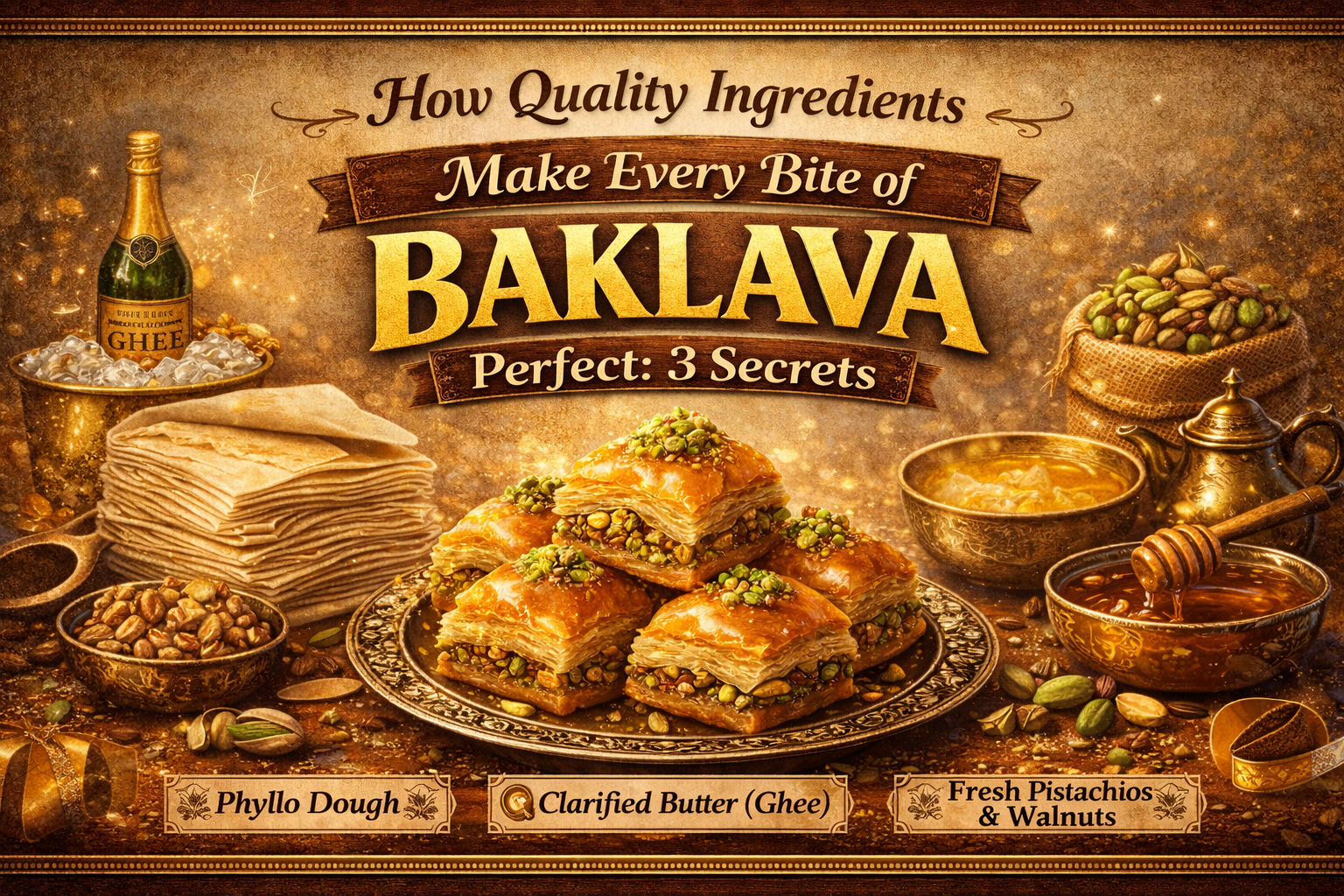
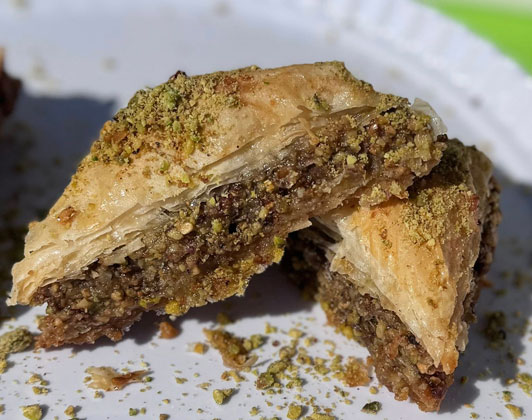
In my kitchen at A Lil’ Baklava, I have a simple saying. You cannot hide bad ingredients in a transparent dough.
Baklava is unforgiving. Because phyllo dough is paper-thin, every single flavor profile shines through. If the walnuts are old, you will taste it. If the butter is cheap, you will feel it. But when the ingredients are pristine, the result is magic.
As a nurse, I also look at food differently. I care about what goes into your body. I believe that if you are going to indulge, it should be worth it. It should be real.
Here is a deep dive into the baklava ingredients list that separates the “okay” desserts from the ones that create memories.
What Makes Baklava So Good? (The Holy Trio)
At its core, baklava is a simple pastry. It relies on the harmony of three main components. If one fails, the whole dessert fails.
The Phyllo (The Crunch)
The dough must be rolled so thin you could read a love letter through it.
This delicate technique is deeply rooted in the fascinating origins of baklava, where ancient bakers first learned to stack dough like leaves to create a masterpiece.
The Fat (The Sizzle)
This is the vehicle for flavor.
It allows the layers to separate and crisp up in the oven.
The Filling (The Heart)
Whether it is pistachios, walnuts, or cashews.
The nuts provide the earthiness that grounds the sugar.
The Sweet Debate: What Is the Main Sweetening Ingredient in Baklava?
This is where many people get confused. If you ask a Greek baker, they might say honey. If you ask a Turkish or Middle Eastern baker, the answer is usually a Simple Sugar Syrup (Attar/Sharbat).
The Secret: At A Lil’ Baklava, we use a light sugar syrup infused with rose water. Why? Honey is heavy. It has a distinct flavor that can overpower the delicate taste of premium pistachios. A clean sugar syrup allows the “nuttiness” to be the star of the show. It also keeps the pastry crispier for longer.
Traditional vs. A Lil Baklava Ingredients
Baklava travels the world, and every culture adds its own signature. This ability to adapt to local ingredients, from pistachios in Turkey to walnuts in the Balkans, is the driving force behind the sweet history of baklava and its global popularity.
The Middle East loves to make things richer! While we enjoy the nut-filled version, we also have a variation often called “Goulash.”
Traditional Baklava Ingredients:
Egyptian Baklava Ingredients
Dough
Phyllo sheets (unleavened flour, water, tiny amount of oil). These simple, humble ingredients have remained virtually unchanged throughout a brief history of the world’s most beloved pastry, proving that you don’t need complexity to create luxury
Egyptians often cut them into larger squares or diamonds compared to the smaller Turkish cuts.
Filling
Chopped walnuts or pistachios (common in the Levant and Turkey).
Sometimes filled with a sweet cream custard (Qishta/Ashta) instead of nuts
Fat
Clarified butter (Ghee) or unsalted butter.
Often made with strong rustic Samna (clarified butter) for a deep aroma.
Syrup
SugarWater lemon juice and sometimes orange blossom water
Sugar
The Health Question: Is Baklava Healthy or Unhealthy?
As a nurse, I get this question constantly. Let’s be honest. It is a dessert. It contains sugar and fat. However, it is not “junk food.”
The “Quality Calorie” Perspective: Unlike a processed candy bar filled with corn syrup and preservatives, baklava is made of whole foods.
Nuts: High in protein, healthy fats, and fiber.
Satiety: Because it is rich, one or two pieces satisfy your craving. You are less likely to overeat compared to a bag of chips.
How to Make Baklava Healthy (Ingredients for a Healthy Version)
If you are watching your intake but still crave the crunch, you can tweak the ingredients for a healthy baklava version.
1. Upgrade the Fat:
Use high-quality grass-fed Ghee
or even a mix of coconut oil and butter.
2. Reduce the Sugar:
You can make it using agave nectar
or monk fruit sweetener instead of refined white sugar.
3. Boost the Nuts:
Increase the ratio of walnuts.
Walnuts are rich in omega-3 fatty acids, which are beneficial for heart health.
Go Organic:
Ensure your flour and nuts are free from pesticides.
This changes the baklava ingredients from simple commodities to nutrient-dense fuel.
What Is the Secret to Crispy Baklava?
Have you ever had soggy baklava? It is heartbreaking. Here is the secret to ensuring that “shatter” sound.
Clarified Butter (Ghee):
Regular butter contains milk solids and water.
Water creates steam. Steam makes dough soft.
By using Ghee (butter with water removed), you ensure a fry-like crispiness in the oven.
The Temperature Shock:
You must pour Cold Syrup over Hot Baklava.
This reaction seals the crispness instantly.
If both are hot, it turns into mush.
A Note on Flavoring: How Much Imitation Butter Flavoring to Use?
Some bakers ask about using imitation butter flavoring to cut costs or enhance aroma. At A Lil’ Baklava, we believe in real ingredients. Nothing beats the taste of real dairy butter.
However, if you are using a neutral oil (like canola) for a vegan version and need that buttery taste:
The Ratio: Use sparingly.
The Amount: Approximately 1/2 teaspoon per cup of oil.
Warning: Artificial flavorings can leave a chemical aftertaste. Use with caution. We always recommend sticking to natural fats whenever possible.
Final Thoughts
Baklava is more than just a sweet treat. It is a reflection of the ingredients you put into it. It honors the labor of the farmer who grew the pistachios and the miller who ground the wheat. This commitment to quality is ultimately why baklava is the perfect dessert for any celebration, because special moments deserve real ingredients.
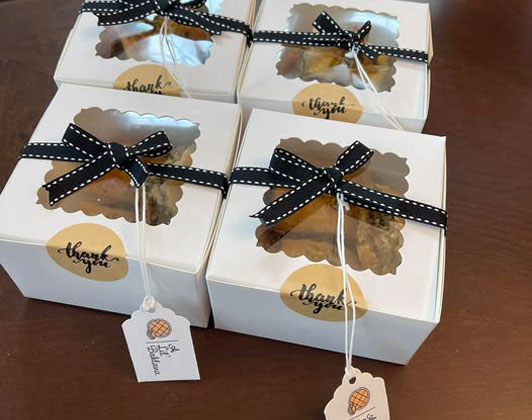
Whether you order a box from us or try baking it yourself, remember one thing. Use the best ingredients you can afford. Your tastebuds will thank you.