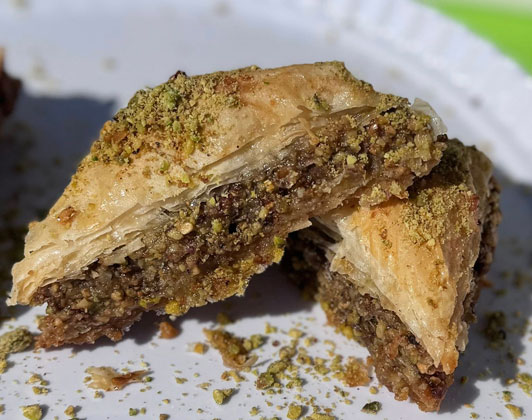
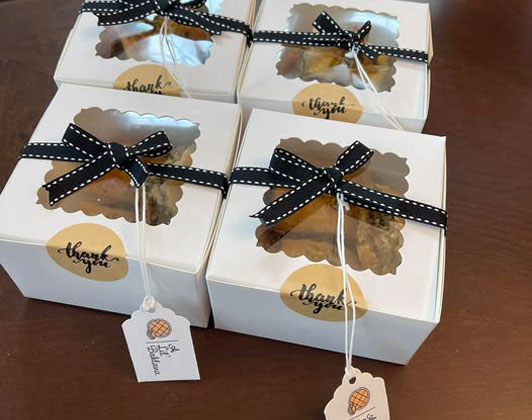
It is often said that in ancient times, certain sweets were considered so sacred they were buried with royalty to ensure a sweet afterlife. Across the Eastern Mediterranean, the Levant, and the Middle East, pastries were never just food, they were symbols of hospitality, celebration, and honor.
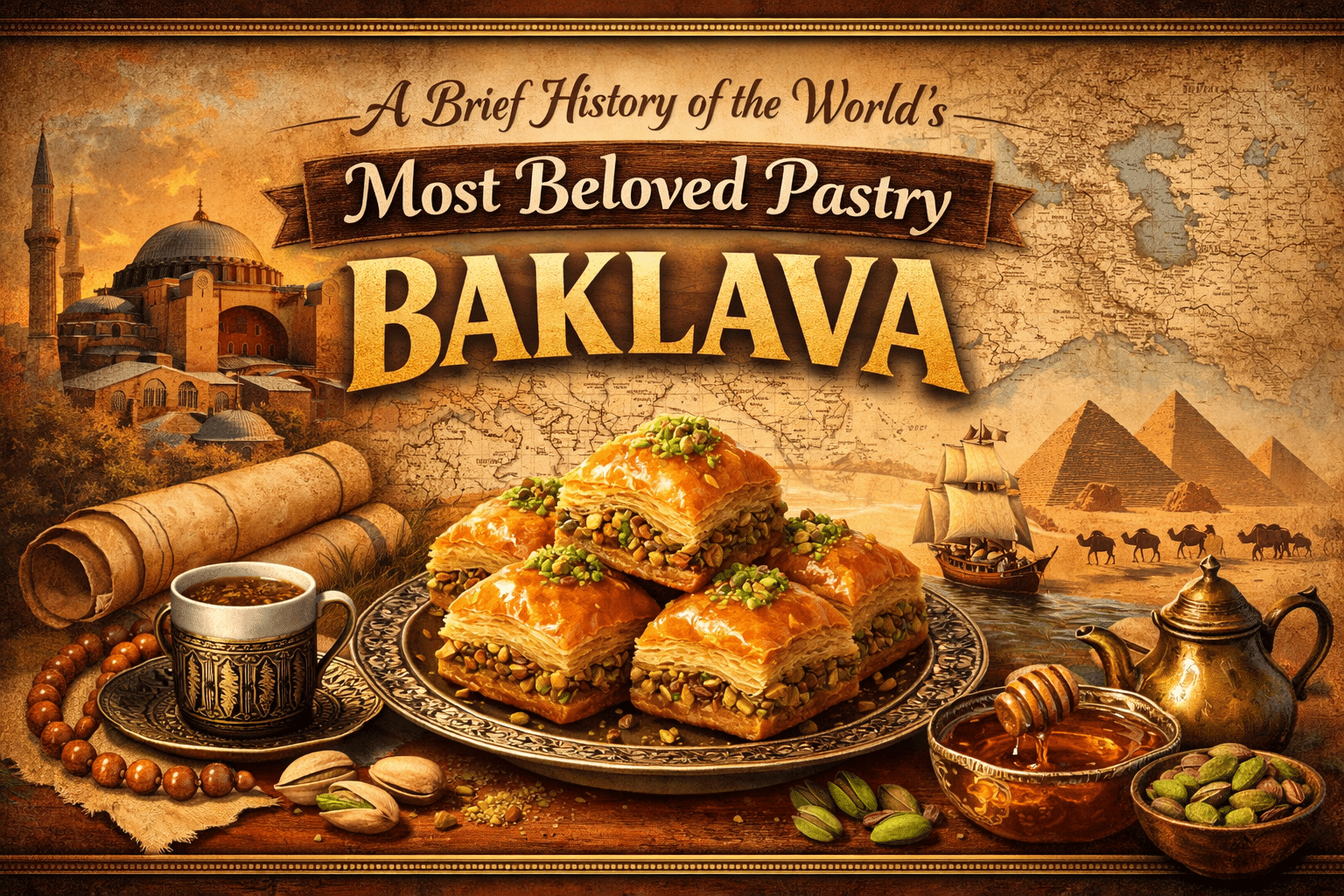
I discovered this while researching my own craft. As I moved from my nursing scrubs to my apron, I realized that every tray I bake carries thousands of years of stories. Today, I want to take you on a journey through the history of what I proudly consider the King of Pastries: Baklava.
What Is the World’s Most Beloved Pastry?
Is it the croissant, served every morning in cafes from Paris to New York? Or is it Baklava, with its countless layers that have graced imperial palaces?
Many of you ask, “What is the most famous pastry in the world?” While the croissant is a global symbol of breakfast relying on butter and air, Baklava is the symbol of celebration, relying on patience, precision, and layers. Both have deep roots, but for those seeking a taste of ancient hospitality, Baklava reigns supreme.
The History of Pastries: A Tale of Luxury
The history of pastries is not just about food; it is a history of luxury. For centuries, ingredients like butter, fine flour, sugar, and nuts were reserved for the elite. Today, I feel privileged to share what was once a “royal” palace dessert with everyone through A Lil’ Baklava Shop.
You don’t need a dry history PDF to understand the essence of baking. It has evolved alongside technology, from ancient clay ovens to the high precision ovens I use today to ensure every piece is golden, crisp, and perfectly balanced.
The Evolution of Pastry: A Timeline
Stage One: The Humble Grain (Survival Mode)
- Over 12,000 years ago, humans learned to grind wheat and mix it with water.
- Early flatbreads were dense and functional.
- Pastry at this stage was about survival, not pleasure.
Stage Two: Egypt & the First Sweet Aroma
- Ancient Egyptians introduced:
- Fermentation
- Clay ovens
- Honey and animal fats
- The dough became softer and aromatic.
- Pastries began appearing in rituals and offerings, not just meals.
Stage Three: Greece, Rome & the Birth of Bakeries
- Ancient Greeks added nuts and early sweet fillings.
- Romans formalized baking as a profession.
- In 168 BC, the first known bakers’ guild was established.
- Baking became a respected craft, not just a household task.
Stage Four: The Islamic East , Precision & Refinement
- This stage is where baklava truly begins to emerge.
- Across the Levant, Persia, and Ottoman lands, bakers refined:
- Sugar syrup
- Nut fillings
- Delicate layering techniques
- In palace kitchens from Baghdad to Istanbul, baking became an art of balance and repetition.
This era laid the foundation for baklava as we know it today.
Why Baklava Is the “King of Pastries”
Baklava is not difficult , it is demanding.
- Paper-thin phyllo
- Perfectly toasted nuts
- Syrup that enhances, not overwhelms
Historically, mastering baklava required years of training, especially in the Ottoman palace kitchens, where some versions contained over 40 layers of phyllo.
Stage Five: The Ottoman Golden Age
- Baklava reached its peak in the Ottoman Empire.
- It became a ceremonial dessert served to sultans and soldiers alike.
- Regional styles developed across:
- Turkey
- The Levant
- The Caucasus
- Persia
This Each culture shaped baklava without claiming ownership , making it a shared culinary heritage.
This part of history makes me especially proud of our baklava. Time and again, customers have told us that our baklava reminds them of the ones they enjoyed in Istanbul , one of the historical heartlands of this dessert , and more than once, they’ve said ours is even better. Others have also compared it to the ones they had in Middle Eastern countries, describing it as “tastes exactly like home.” For a pastry so deeply rooted in tradition and history, those comparisons are not taken lightly. It’s the highest compliment and a reminder that honoring history while refining balance truly matters.
Stage Six: The Modern Era, A Shared Language
- By the 19th century:
- Written recipes spread
- Oven technology improved
- Baklava traveled globally through migration
- Today, baklava is enjoyed worldwide while remaining deeply tied to its roots.
The Nurse’s Perspective: Why A Lil’ Baklava Is Different
As a nurse, I approach baking as a science of balance. The crunch you love isn’t accidental, it’s controlled temperature, timing, and restraint.
Traditional baklava often focuses on more phyllo and minimal nuts. I chose to honor tradition, while improving the experience. So, I created my own standard.
Here’s what sets A Lil’ Baklava apart:
- Nut-Forward by Design
Traditionally, baklava uses many layers of phyllo with thin nut fillings.
Ours flips the ratio:- Fewer phyllo layers
- Three generous layers of premium pistachio and walnut mix
- Rich, satisfying texture in every bite
- Middle Eastern–Inspired Syrup
Instead of honey-heavy sweetness, our syrup takes a Palestinian approach:- Light sugar syrup
- Infused with rose water
- Aromatic, floral, and balanced — never overpowering
- Balanced Sweetness
Baklava should enhance the nuts, not drown them.
Our recipe allows the natural oils and flavors to shine. - Modern Innovation, Rooted in Tradition
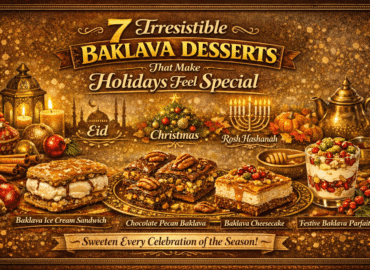
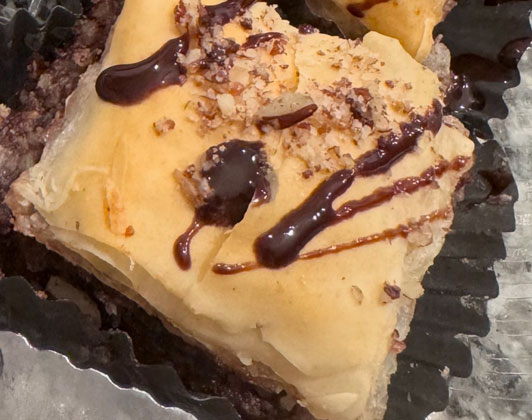
From our classic trays to creations like Baklava Cheesecake and Chocolate Baklava, we honor history while creating something new.
A Pro Tip from My Kitchen
Our baklava can remain safely in a closed container at room temperature for 2 weeks.
If you would like for it to last longer, you can store it in the fridge for weeks. Pro tip , Never eat baklava straight from the fridge. Let it rest at room temperature for 20 minutes to awaken the nut oils and floral notes of the syrup, this is how baklava was meant to be enjoyed.
Every time I step out of my nursing scrubs and into my apron, I’m stepping into a 12,000-year-old tradition, one rooted in hospitality, celebration, and care.
My mission is simple: To give you a piece of history that tastes like home.
Ready to taste it for yourself? Shop Our Collection Now.